Blizzard Is a Definition, Not a Marketing Plan: A Winter Alert Decoder for 2026–27
Somewhere in the first week of December, a graphic will slide across your feed with a name like Winter Storm Kestrel, a purple blob, and the words HISTORIC BLIZZARD set in a font that has never once been used for anything calm. Your cousin will share it. A local news tease will borrow it. Meanwhile the National Weather Service will be running a winter weather advisory for three to five inches, and those two messages are not describing the same thing.
This is not a knock on forecasters. It is a plea for a decoder ring. Storm names, social graphics, and official headlines travel through different pipes, and only one of those pipes connects to the people who decide whether your route gets shut down.
Blizzard is a definition, not a vibe
The official test has nothing to do with how much snow falls. Sustained winds or frequent gusts of 35 mph or more. Visibility cut to a quarter mile or less by falling or blowing snow. Lasting at least three hours. That is the whole checklist.
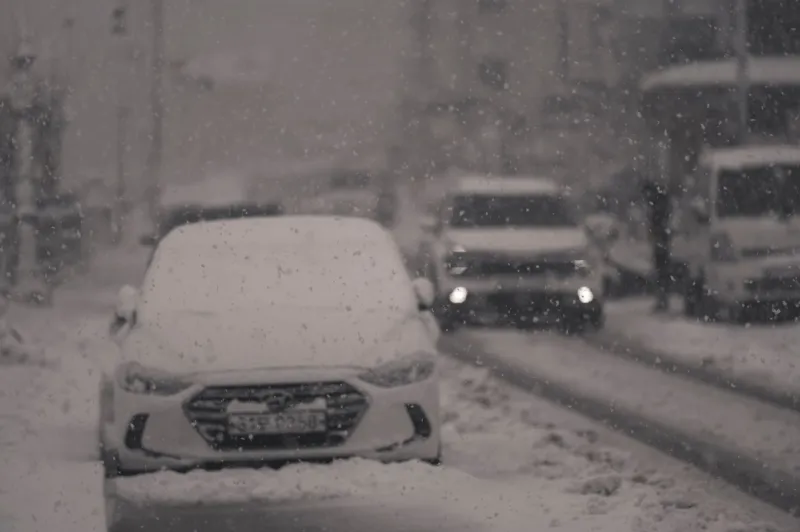
Which means a blizzard can happen with two inches of powder and a stiff prairie wind pushing it across a bare field. And a foot of wet snow dropping straight down in still air is not a blizzard — it is a heavy snowstorm, and it will ruin your commute just fine. There is also the ground blizzard, where no snow is falling at all and existing snow is simply lifted off the fields and driven across the road. Those events are among the fastest ways to lose a highway to zero visibility.
Watch, warning, advisory: the ladder that actually matters
- Winter Storm Watch. Roughly 24 to 48 hours out. Conditions are possible, not promised. Pay attention; do not rearrange the week.
- Winter Storm Warning. Expected. Thresholds vary by forecast office and elevation — commonly six inches or more in 12 hours, or eight in 24, with lower cutoffs when ice and sleet are involved.
- Winter Weather Advisory. Usually in the three-to-five-inch range, or lighter snow paired with wind and bad timing. Chronically underrated, because an advisory sounds optional.
- Ice Storm Warning. A quarter inch of accretion or more. A quarter inch turns an interstate into a skating rink and starts taking down branches.
- Flash Freeze Warning. Issued by some offices when wet pavement is about to freeze quickly, often behind rain or a daytime thaw. Fewest inches of any product, highest crash rate per mile.
- Blizzard Warning. The three-hour definition above. Notice what is missing from it: an accumulation forecast.
Where storm names come from, and what they are worth
The Weather Channel has named winter storms since 2012. The National Weather Service does not name them and does not use those names in its own products. That is not a conspiracy; it is a branding and communication choice that other outlets have largely declined to follow. The practical takeaway is simple enough: a named storm is a label, not a warning. It tells you a system exists. It does not tell you whether I-80 is shut, whether your county is under a restriction, or whether one band is going to park over your exit for four hours.
What actually closes a road
Nobody at the Weather Service closes a highway. State DOTs and state police do, using forecast input, plow capacity, and the number of vehicles already in the ditch.
- New York shuts sections of the Thruway and issues commercial vehicle bans ahead of major lake-effect events.
- Pennsylvania restricts or bans certain vehicles on interstates such as I-80 and I-81 during winter emergencies.
- Indiana runs a three-level travel status system — advisory, watch, warning — where the top level means emergencies only.
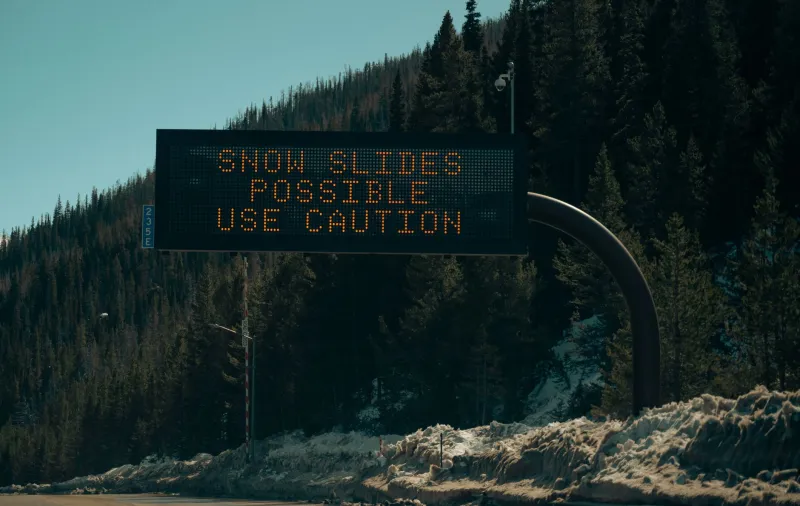
- Colorado and other mountain states lean on traction and chain requirements rather than blanket closures.
- Local whiteout shutdowns can happen with no headline product at all, because a band sat over one two-mile stretch of road.
The conclusion: a blizzard warning is not a travel ban, and a travel ban is not a blizzard warning. Check 511 and the state police feed for the corridor you are actually driving, not the county you sleep in.
The go / delay / shelter checklist
GO
- No active warning, restriction, or closure on your corridor.
- Modest totals and wind under 20 mph in the forecast discussion.
- Winter tires or solid all-seasons, a full tank, and daylight on your side.
- You can shift departure by an hour to dodge a band.
DELAY
- A watch is up and its timing overlaps your drive.
- The discussion uses the words narrow and locally about lake-effect bands.
- Freezing rain or a flash freeze is in the mix.
- Your route crosses a ridge, a long bridge, or an open stretch famous for blowing snow.
Six to twelve hours is often all that separates a genuinely ugly drive from an ordinary one.
SHELTER
- A warning, restriction, or closure covers your corridor.
- Visibility is already reported under a quarter mile.
- Emergency managers are asking people to stay off the roads.
- The discussion mentions thundersnow, two-inch-per-hour rates, or the phrase do not travel.
Three phrases to retire
- It is only an advisory. Advisories are where the fender benders live.
- The storm has a name, so it must be serious. Names are assigned before anyone knows how a band will behave.
- The radar looks clear. Lake-effect bands are frequently too narrow and too shallow for the map you are staring at, and they rebuild in the same spot after clearing out.
What to actually read this season
The forecast discussion, not the graphic. Each NWS office writes one in plain language, and it is where the sentence that matters actually lives — something like band may oscillate north of the Thruway during the evening commute. Follow the office that covers your route (Buffalo, Binghamton, Cleveland, Grand Rapids, Chicago, Gaylord), pair it with your state's 511 cameras, and skip anything with a lightning bolt emoji and a countdown clock.
The word blizzard has been doing a lot of unpaid labor for a long time. Give it a rest. Learn the three-hour definition, learn what your DOT actually does with it, and make your go or no-go call on the road in front of you rather than the storm that got a name.