Borrowed Edges: The Flat-Light Survival Playbook for Skiers and Riders
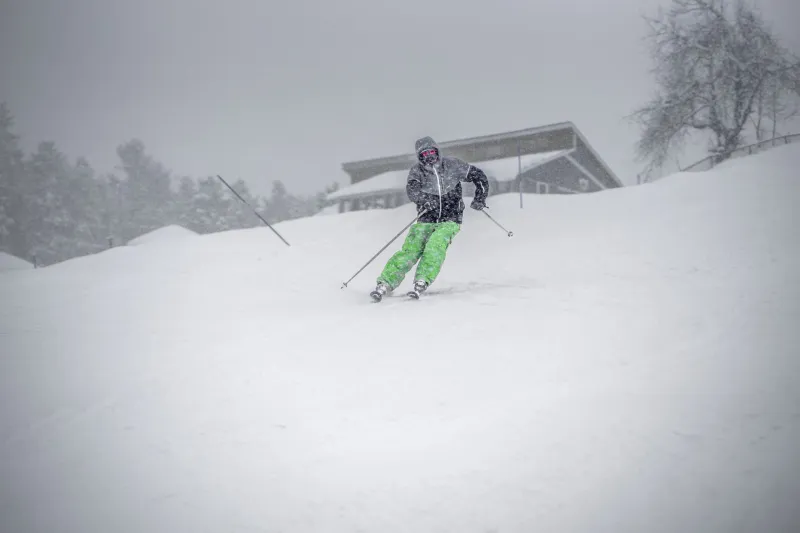
You unload from the lift on an overcast day and the snow looks strangely smooth, almost painted on. Your first turn feels fine. Your second feels fast. By the third, the slope ahead has gone soft and dimensionless, and you realize you are not sure whether that pale patch is a groomer, a rollover, or the sky. Nothing is falling. The wind is mild. And yet the mountain has turned into a gray room.
That is flat light, and it is one of the quieter hazards in winter sports. It does not need a storm warning or a closed highway. It just needs a low cloud deck, diffuse sunlight, and a snow surface that reflects almost everything back at you. The result is a landscape with very little visual contrast, and a brain that suddenly has to guess at depth.
The Mountain Is Still There. Your Cues Are Not.
On a sunny day, shadows do a lot of unpaid work. They reveal bumps, dips, rollovers, and the seam between a groomed run and unpacked snow. Texture helps too: corduroy lines, wind ripples, tracks, and small drifts all give your eyes something to grab onto. Flat light takes those cues away. Cloud cover acts like a giant softbox, spreading light evenly across the snow so shadows fade and surface details blend into one another.
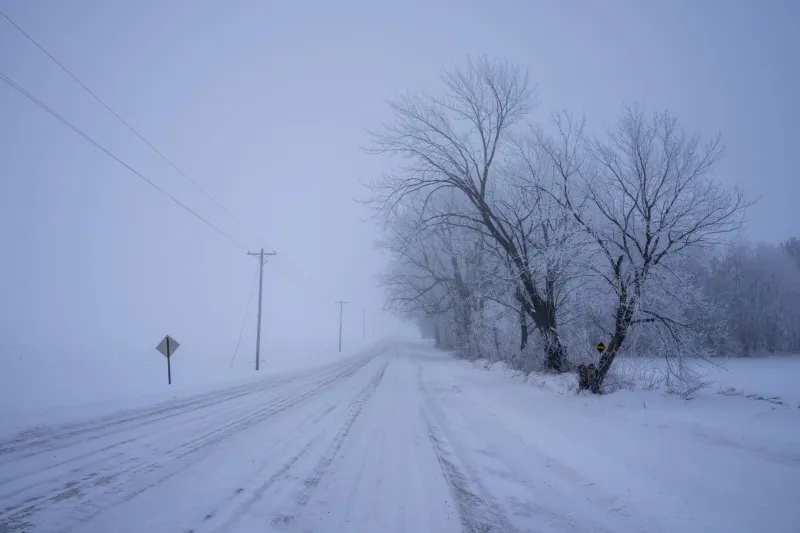
At close range, your eyes still use stereopsis, the slightly different view from each eye, to judge depth. But that system gets weaker with distance. On a wide-open slope, your brain leans heavily on shadows, texture, and horizon lines. Remove those and it starts filling in gaps. Sometimes it fills them in wrong. A harmless rollover can look like a flat patch. A flat patch can look like a drop. The sky and snow can merge into the same pale gray, which is why flat light is sometimes described as a whiteout without the wind.
Your Goggles Are a Contrast Tool, Not a Fashion Statement
Lens choice matters, but it is not magic. For flat light, look for a low-light lens with a high visible light transmission and a rose, copper, or yellow tint. Those tints can boost contrast in the blue-gray palette of an overcast snow day. Dark lenses, especially those built for bright sun, can make a gray day feel even grayer.
Carry a spare lens if your goggles allow it. Keep both lenses dry and avoid wiping snow or moisture across the inside. A smeared lens in flat light is worse than no lens at all. Also remember that contrast-enhancing goggles help you see the snow better. They do not restore the depth cues that the cloud deck removed. If the slope ahead is featureless, a great lens will still show you a featureless slope.
Pick Terrain That Gives You Edges
The best flat-light tactic is terrain selection. Low-angle groomers, runs with tree lines on both sides, and slopes with visible lift towers or fence lines give your eyes anchors. Trees are useful because they break up the gray, but they are also obstacles. Do not trade a depth-perception problem for a tree-well problem. If you are going to ski near trees, stay on the open side of the boundary and keep your speed down.
Open bowls, convex rollovers, ridge lines, and cat tracks are harder. A convex slope hides what is below it even in good light. In flat light, it can hide it completely. Cliffs, drop-offs, and sudden terrain changes deserve extra caution. If you cannot see the shape of the snow, do not assume it is smooth. Use a pole to probe suspicious rolls, and give blind rollers a wide margin.
Speed Is a Depth Cue You Cannot Afford
In flat light, speed removes your reaction time before it removes your confidence. Slow down more than feels necessary. Make shorter turns. Stop in safe, visible zones rather than in the middle of a blind roll. Ski or ride one turn ahead of yourself, meaning you are always planning the next turn based on terrain you can actually see, not terrain you hope is there.
Keep your group close and visible. Bright helmets, packs, or jackets help others track you, but they do not help you see the snow. Use a buddy system, especially with children. If someone in the group is falling repeatedly or hesitating at every turn, that is data. Flat light is a group problem, not a personal challenge.
Read the Snow Underfoot
When your eyes lose contrast, use your skis, board, and poles as sensors. Feel for changes in resistance and texture. Listen to the snow. A pole plant can reveal whether that smooth-looking patch is packed groomer or unconsolidated drift. Small surface clues, like wind ripples, faint tracks, darker seams, or bits of debris, can give you a line to follow. They are borrowed edges, and sometimes they are the only edges you get.
When to Call It a Day
Flat light becomes a real safety issue when you feel vertigo, nausea, or a strange sense of floating. If you cannot tell where the slope ends and the sky begins, stop. If you are repeatedly surprised by terrain you did not see, stop. If the group is tired, cold, or arguing about whether the next run is safe, stop. Head to the lodge, check the forecast, and consider a lower-elevation trail or a different activity.
Flat light often shows up before or during a storm, so treat it as a preview rather than a nuisance. Ski patrol may close terrain for visibility, and that is not an overreaction. The mountain will still be there tomorrow. The gray room has a door, and the safest move is often to walk through it before you have to find it in a hurry.