When the Plow Leaves Walls: A Pedestrian’s Guide to Blind Winter Corners
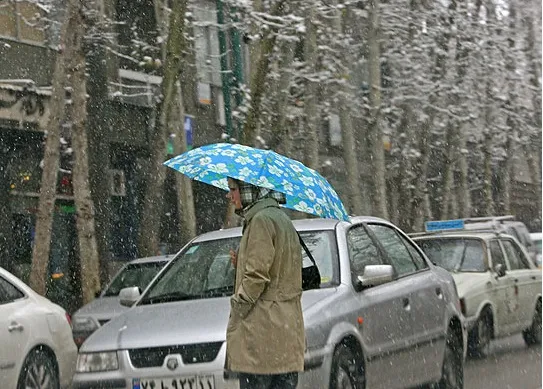
Photo: Hassan Ghaedi, CC BY 4.0, via Wikimedia Commons
The morning after a storm, the corner near your bus stop looks familiar in every way except one: the view. The stop sign is there, the crosswalk paint may be there under a skim of slush, but the sightline is gone. A plow has pushed the storm into a long white wall, and now you and a driver are playing a guessing game with each other’s existence.
Snowbanks are temporary architecture. They are also one of the most underrated hazards of winter walking in the US. They narrow sidewalks, bury curb ramps, and turn ordinary intersections into blind corners where drivers and pedestrians never see each other until the last second. The fix isn’t just better footwear or a brighter jacket. It’s reading the corner like a weather hazard and building a routine that assumes the view is blocked.
Snowbanks change the geometry, not just the scenery
At a normal intersection, drivers and pedestrians share a sight triangle: the clear wedge of space where each can see the other before anyone commits. Snowbanks cut into that wedge. A pile four to six feet high at the corner can hide a child, a person in a wheelchair, or an adult in dark clothing. It can also hide the front end of a turning car from a pedestrian’s view.
This matters most at right-turn-on-red corners and wide suburban intersections. A driver creeping forward to see around a snowbank is often looking left for traffic. The pedestrian approaching from the right may be outside the driver’s attention until the vehicle is already moving. Add a buried curb ramp and a crosswalk narrowed by plowed snow, and the pedestrian is steered into the exact spot with the worst visibility.
Why stopping distance makes a blind corner worse
A driver who sees you late has less time to react, and winter roads stretch that reaction into a longer slide. On dry pavement, a car at 25 mph needs roughly 60 feet to stop under ideal conditions. On packed snow or ice, that distance can easily double or triple. If a snowbank limits the driver’s view to 20 or 30 feet, the math is already against everyone.
Pedestrians have a version of the same problem. You may see headlights, but you can’t see whether the car is slowing, whether the driver is looking at a phone, or whether another vehicle is about to turn behind the pile. The safe assumption at a snowbank corner is not that the driver sees you. It’s that the driver cannot see you yet.
Build a winter route, not just a crossing
Before the next storm, walk your usual route in daylight and note the corners that go blind. If you can, choose intersections with traffic signals, push buttons, and curb ramps that are likely to be cleared. Avoid midblock crossings between snowbanks. A marked crosswalk at a signal is not automatically safe, but it gives you more tools: a controlled phase, a place where drivers expect people, and often better street lighting.
If your nearest corner is chronically walled in, consider a slightly longer route to a corner with a clearer sightline. That is not victim-blaming; it is hazard management. The city should clear the corner, but you still have to cross today.
The three-look crossing routine
At the curb, stop before the snowbank, not behind it. Find the spot where you can see approaching traffic and where a driver can see you. Look left, right, and left again. Listen through your hood. Make eye contact with the driver who is actually stopped. A wave is not a guarantee; wait until the vehicle has fully stopped and the driver is looking your way.
When you step off, cross briskly and keep scanning. Do not run on ice. Do not assume a turning car has seen you because it is moving slowly. At night, carry a small flashlight or clip-on light and wear something retroreflective. Bright colors help in daylight; reflective material helps when headlights are the only light source.
Gear that buys visibility
You do not need expedition gear for a walk to the store. You need contrast and reflection. A reflective vest, bands on your wrists and ankles, or a strip on your bag can make you visible earlier. A small headlamp or handheld light helps drivers pick you out at dusk, but keep it angled low so you do not blind them. Keep your hood back at crossings so you can hear tires and plows.
If you live on the corner, flag it
Residents can do more than complain after a near miss. Document the corner after each storm: photograph the blocked sightline, the buried curb ramp, and the narrowed crosswalk. Note the date, time, and address. Send it to your city’s 311 system or public works department and ask for sightline clearing at the corner, not just plowing the travel lane. In many places, snow removal crews have a route priority; a specific, photographed request is harder to ignore than a general complaint.
A short resident checklist:
- Clear your own curb ramp and sidewalk edge without throwing snow into the street.
- Photograph corners where snowbanks block the view of the crosswalk or stop sign.
- Report buried curb ramps and obstructed sightlines to 311 or your state DOT.
- Ask neighbors to adopt a corner after major storms.
- Keep a reflective band or clip-on light near the door for evening walks.
Winter walking is not about being fearless. It is about being legible. At a snowbank corner, your job is to be seen as early as possible and to cross where the geometry gives you a chance. The plow will leave walls. Your routine can keep them from becoming traps.