The Shadow With a Blade: Sharing the Road With Plows When Visibility Collapses
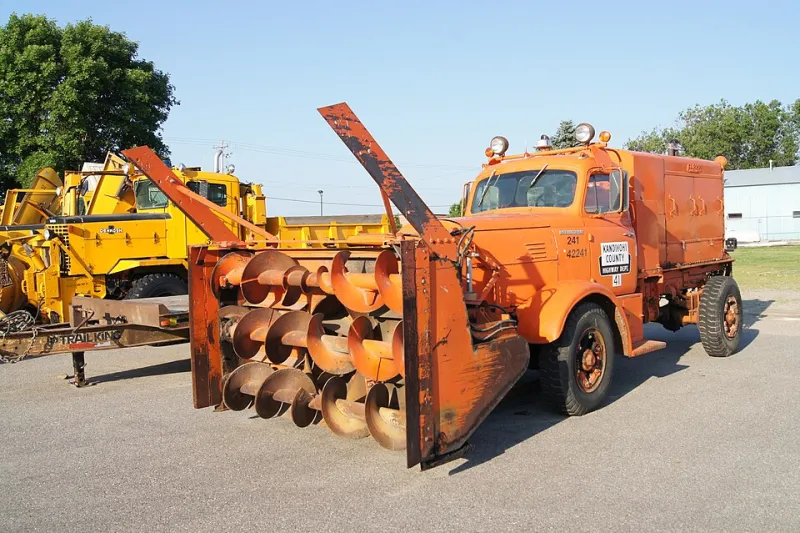
Photo: Greg Gjerdingen from Willmar, USA, CC BY 2.0, via Wikimedia Commons
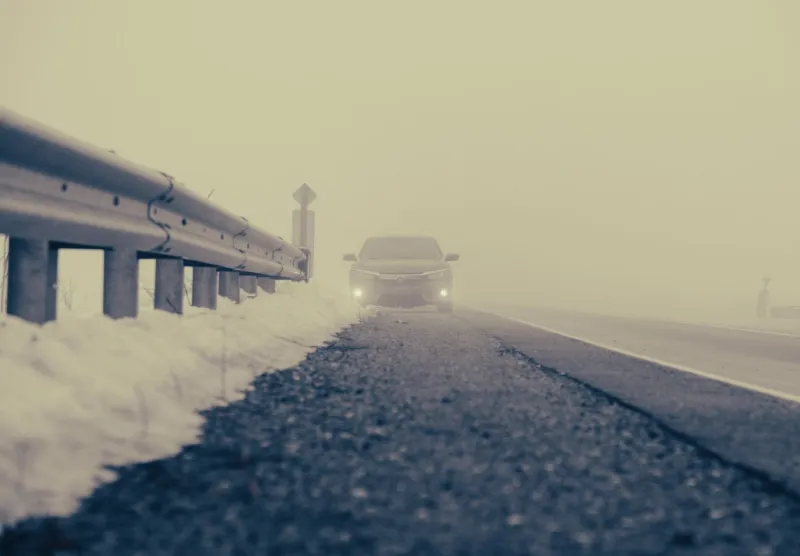
You see the glow before you see the truck: an amber smear pulsing somewhere inside a cloud of snow. Then a darker shape resolves, maybe. Then the spray swallows it again. That is the moment a winter maintenance vehicle stops being a piece of equipment and becomes a rolling visibility hazard with a very wide blade.
Most drivers understand that plows are slow and heavy. Fewer plan for the fact that a plow actively manufactures the whiteout around itself. The plume off the blade, the salt and sand in the air, the way headlights bounce off suspended snow — all of it compresses your reaction time into a few car lengths. The protocol below is about buying those car lengths back.
Read the Spray Before You Read the Shape
A plow's spray is a signal. If you can see a bright bloom of light but no clear truck body, you are already inside the effective visibility envelope. Slow down before you can identify the vehicle, not after. High beams make this worse — they light up the snow in the air and throw a white curtain back at you. Low beams, fog lamps if you have them, and a clean windshield are the baseline. If your wipers are smearing rather than clearing, you are not ready to judge a gap.
Plow lighting varies by agency and state, but most run amber warning lights, often with additional strobes or directional boards. Some trucks carry green or blue auxiliary lights depending on local rules. Do not wait to decode the exact color scheme. Treat any flashing cluster ahead in low visibility as a slow-moving hazard until proven otherwise.
The Wing Blade Is the Part You Can't See
The main plow blade is obvious. The wing blade is the problem. On many trucks, a wing extends well beyond the passenger side of the cab, sometimes far enough that the truck's effective width is much greater than its body suggests. In snow dust and flat light, that wing can disappear completely. Drivers see the truck, assume the lane is clear on the right, and discover the wing only when it is already at their door.
That is why passing on the right is a bad habit even in good weather and a genuinely dangerous one in a whiteout. The plow may also be straddling lanes to clear a shoulder or push snow toward the median. Its shadow can look like an open lane. Its spray can hide a second plow running in echelon. Give the whole shape room, and assume there is more blade out there than you can see.
Why Passing Is Usually the Wrong Move
Passing a plow in low visibility means accelerating into the plume, spending time alongside a vehicle with large blind spots, and hoping the lane ahead stays clear long enough to complete the move. Plow operators cannot see directly behind the truck for a considerable distance, and the spray behind the blade can hide a passenger car completely. If you cannot see the plow's mirrors, assume the operator cannot see you.
There is also the pocket of whiteout that travels with the truck. You may pass into clear air for a second, then hit a fresh wall of blowback. On two-lane roads, the risk compounds: the plow may be clearing both directions, and oncoming traffic can appear out of the same cloud you just entered.
If you truly must pass — because the plow is crawling and you have a safe, legal opportunity — wait until the spray thins, confirm a long clear sightline, pass on the left, and do not linger alongside. Never pass on a shoulder or into a merge lane that the plow may be using. And do not treat a plow pulling onto the shoulder as an invitation. Operators sometimes pull over to let traffic by, but in low visibility that shoulder may be softer and narrower than it looks.
Build a Following Gap and an Escape Plan
Many state transportation departments suggest staying at least 200 feet behind a plow — roughly ten car lengths — and that is a fair minimum in decent winter conditions. In a genuine whiteout, 200 feet is not enough. The useful rule is simpler: if the spray is hitting your windshield hard enough to force the wipers to high, you are too close. Back off until the plume becomes a haze rather than a wall.
Before the road disappears, pick your escape spaces. Note the exit ramps, the wide shoulders, the pullouts, the chain-up areas, the places where you could get fully off the travel lane if visibility hits zero. Do not plan to stop in the lane and wait it out. A plow coming up behind you cannot stop quickly, and neither can the truck behind the plow.
If a plow train — several trucks running in staggered formation — is clearing the highway, stay behind the last one. Do not try to thread between them. The gaps are not lanes.
Your Own Lighting and Speed Discipline
Turn off cruise control. In snow, cruise control can accelerate into a slip before you feel it. Use low beams, not high beams. Keep your headlights and taillights clear of snow so other drivers can see you. Hazard-light use while moving varies by state; know your local rules, but do not rely on flashers to make a bad following distance acceptable. Increase your gap, reduce your speed, and steer with smooth inputs.
When the Road Goes Blank
If visibility drops to near zero and you cannot reach an exit or pullout, get as far off the travel lane as you safely can, keep your lights on, stay buckled, and call for help if needed. Do not stand outside the vehicle. A plow may pass close enough to spray you with ice and salt, and the driver may never see a person on foot.
The plow you cannot see is not being rude. It is doing a job that makes the road worse before it makes the road better. Treat it as a moving whiteout with a blade — read the spray, respect the wing, skip the pass, and build a gap you can actually stop in. That is the low-visibility protocol. The clear pavement is coming. It is just behind the truck.