The Two-Day Roof Hangover: Auditing for Ice Dams After the Storm Bows Out

Photo by Photo by Izzy Park on Unsplash on Unsplash
Winter storms get the headline. The leak gets the sequel. An ice dam can sit on a roof through an entire nor’easter and never make a sound. Then the sky clears, the attic warms just enough, and a day or two later you are looking at a tea-colored ring on the ceiling. That lag is not luck. It is the physics of meltwater taking the slow route.
Why the drip shows up after the storm
An ice dam is less a single object than a traffic jam. Heat escaping from the house warms the upper roof deck. Snow on top melts, and that water runs downhill until it reaches the cold overhang above the eaves. There it refreezes. Repeat that cycle for hours, and you build a ridge of ice. Behind the ridge, meltwater pools. Eventually it backs up under shingles, through underlayment seams, and into the attic or wall assembly.
During the storm, that water may not have anywhere to go yet. The dam is still forming, the snowpack is still absorbing some melt, and the path through the roof is not fully open. A sunny day or a warm attic can push enough liquid through to finally show up inside. That is why the morning after the plow comes through is not always the morning your ceiling tells the truth. Sometimes the bill arrives 48 to 72 hours later.
Gutter blockage makes it worse. A downspout packed with frozen leaves or a gutter full of ice gives meltwater no exit. The dam gets thicker, the pool gets deeper, and the leak gets more ambitious.
The outside audit: keep your feet on the ground
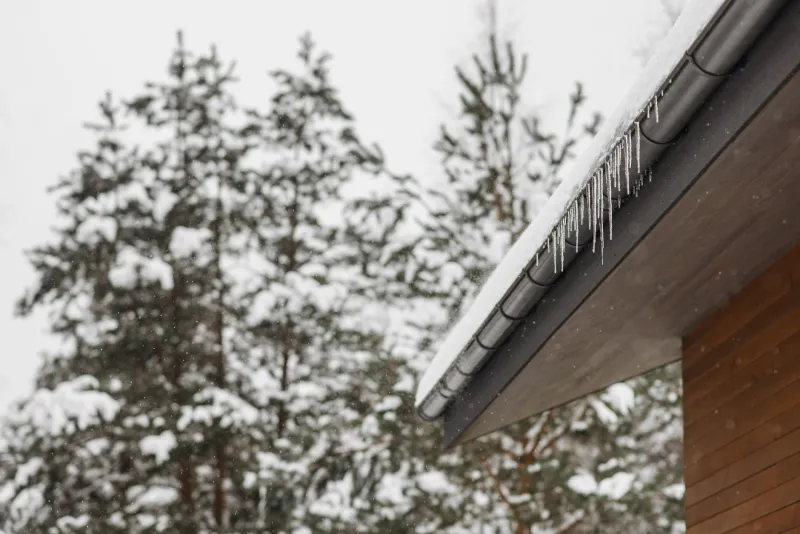
Start outside, but stay on the ground. Use binoculars or a phone camera with zoom. Look along the roof edge for a thick shelf of ice, especially one that extends above the gutter. Check for icicles that are wide at the top and clustered, not just a few decorative spikes. Look for dark staining on siding, soffit, or the fascia board. If you see a vertical streak below the roofline, water has already been on the move.
Also look at the snow itself. Uneven melting patterns can be a clue. A strip of bare shingles near the ridge while the eaves are buried in ice suggests warm attic air is doing its thing. If you can see the gutters, check whether they are sagging or packed with ice. Do not climb a ladder onto a snowy roof to get a better look. A fall is a much worse problem than a leak.
The inside sweep: room by room
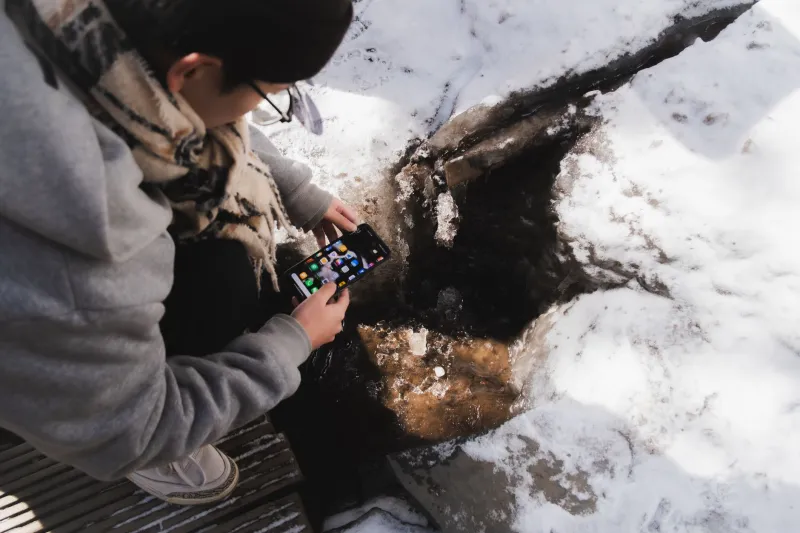
Inside is where the audit gets useful. Grab a flashlight and your phone. Take photos and notes as you go.
Attic
Look at the roof sheathing for dark streaks, damp spots, or frost. Frost on the underside of the roof deck is a red flag for warm, moist air meeting cold lumber. Check insulation for compressed or wet patches. Look around chimneys, vents, and recessed lights, where warm air often escapes. If you see daylight through the roof boards, stop and call a roofer.
Ceilings and walls
Scan for rings, bubbling paint, or soft drywall. A faint outline can be the first sign. Press gently with a fingertip; if it feels spongy, mark it and call a pro. Look at exterior walls near the roofline and around windows for water stains. Musty smells count too, especially in closets and upstairs hallways.
Floors and basements
Water travels. Check for damp carpet, cupping hardwood, or stains on the top floor. Then check the basement or crawl space for new moisture, especially under the roof line. If you have a finished lower level, look at ceiling tiles and baseboards.
Gutters and downspouts
From inside, listen. A downspout that is silent during a melt is a suspect. If you can safely inspect the discharge point, make sure water is actually leaving the house. If not, note it for a professional.
If you find water, contain it first
Put a bucket under the drip. Move furniture, electronics, and anything else out of the splash zone. If a ceiling is bulging, keep people away and call a professional; do not jab at it with a screwdriver unless you know what is above it. If water is near outlets, switches, or a light fixture, turn off power to that area at the breaker. Document everything with photos for insurance.
Small drips can be slowed with towels, but do not seal the ceiling from below. Trapped water will find a new exit. The goal is to manage the leak until someone who knows roofs can fix the cause.
Remove ice safely, or not at all
The safest removal tool is often a phone. Call a roofing or ice-dam professional who uses steam. Never chop at an ice dam with an ax, hammer, or chisel. You will damage shingles and possibly yourself. A roof rake can pull snow off the edge from the ground, but only if you can do it without standing under a snow-loaded roof or reaching over your head near power lines.
Some homeowners use calcium chloride-filled stockings laid across the dam to create a melt channel. That can work, but it is not a free pass. Calcium chloride can damage plants and metal, and it does not fix the attic heat problem. Avoid rock salt on the roof. Save the aggressive chemistry for the driveway, and even there, read the label.
Shut down the cycle before 2026–27
Ice dams are a symptom. The cure is a colder roof deck and a clear path for water. Before the 2026–27 winter settles in, have an energy audit or attic inspection. Seal air leaks around light fixtures, bathroom fans, and attic hatches. Add insulation where it is thin, but keep soffit vents open so the roof can breathe. Make sure gutters and downspouts are clear before the first hard freeze.
If ice dams are a recurring problem, ask about ventilation and roof design, not just a bigger snow rake. Heated cables can help in narrow cases, but they are a patch, not a plan; use only UL-listed equipment with GFCI protection and follow the manufacturer’s instructions. Prevention is less dramatic than rescue, but it is cheaper than replacing a ceiling.
The late leak is still a warning
A leak that shows up two days after the storm is not a fluke. It is the house telling you where heat, ice, and water found a weakness. Audit early, document what you see, and fix the cause instead of just the stain. Winter has a long memory, and so does drywall.